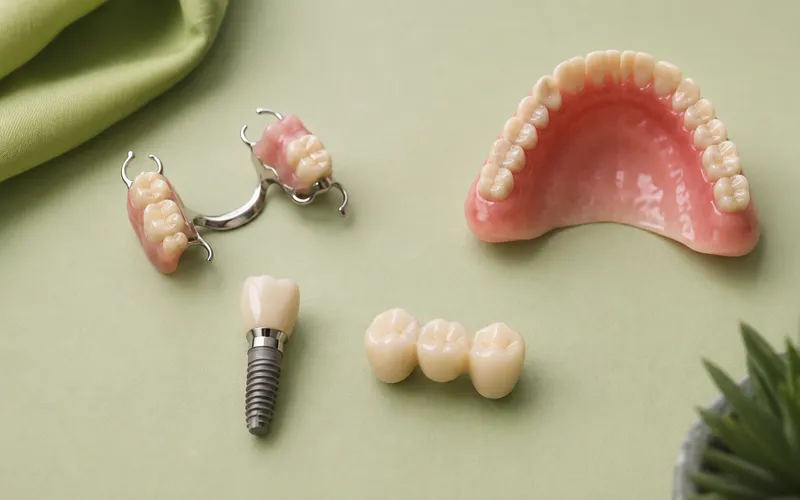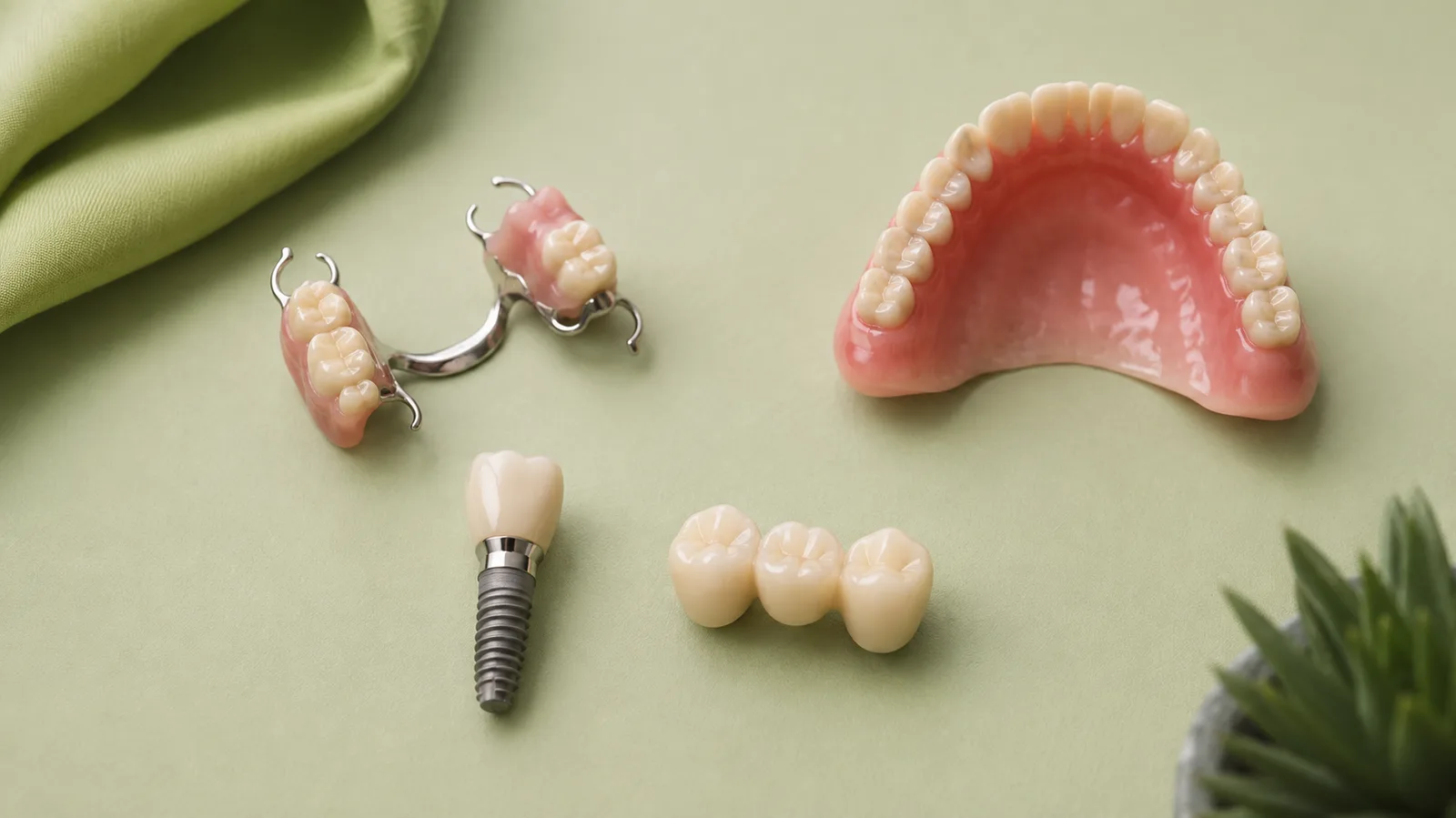
The most common misunderstanding about implants is that every missing tooth needs one. It does not. Implants are foundations, and a foundation can hold more than one tooth. Three missing teeth in a row are usually restored with two implants carrying a three-unit bridge. Five in a row might take three implants. Scattered gaps in different parts of the mouth are a different puzzle, and sometimes the right answer is a partial denture while you stage the permanent work.
Gaps in a row
Two adjacent teeth: two implants with two crowns, or occasionally two implants joined as a small bridge. Three adjacent: two implants at the ends carrying a three-unit bridge is the standard, efficient design. Four or five adjacent: three implants, sometimes four, depending on position and bone. A back-of-mouth span may also stop short: many people do fine without replacing the very last molar, and dentists talk about the "shortened dental arch" as a legitimate end point.
Scattered gaps
Missing one tooth on the left, two on the right and a front tooth is a harder plan, because each site needs its own assessment, and the budget for three separate implant sites can approach the price of an arch. Options include implants at the sites that matter most (front teeth, first molars), a tooth-supported bridge where neighbours already need crowns, and a well-made partial denture to cover the rest while you stage.
The staging conversation
If you are missing many teeth and the remaining ones are in poor condition, a good clinician will ask a hard question early: are we patching, or are we rebuilding? Patching means treating each gap. Rebuilding means accepting that the arch is failing and moving to a full-arch plan, which is often cheaper and more predictable than a decade of individual repairs. The tipping point is different for everyone, but it is a conversation worth having before you spend on the first implant. The full mouth restoration site goes deep on the rebuild path.
Partial dentures: the honest version
A cast-metal partial is lighter, stronger and more precise than an acrylic one, and it is the one worth paying for if you will wear it for more than a year. Flexible nylon partials (Valplast-type) are comfortable and invisible but cannot be relined or repaired easily. Any partial rests on the remaining teeth and gums; it does not stop bone loss, and clasps can stress the teeth they hold. As a bridge to implants it is excellent. As a forever solution it is a compromise you should choose knowingly.
What to ask for
A full-mouth CBCT scan, a plan that shows implants per site and units per bridge, and a price at each stage. If the clinic only quotes per implant, ask them to quote the finished result, because that is the number that matters. Related: implant vs bridge vs denture and one trip or two.
Multi-implant bridges are where Colombian pricing starts to diverge sharply from the US, because the saving compounds per implant and per unit of the bridge. See the vetted clinics at colombiadentist.co, full-mouth cases at fullmouthrestoration.co, or start at the network hub, colombiamedical.co.
Frequently asked
Do I need an implant for every missing tooth?
No. Two implants can carry a three-unit bridge, and three implants can often carry four or five teeth. The number depends on span length, position and bone.
Is it worth replacing a last molar?
Often not. Many people function well with a shortened arch ending at the second premolar or first molar. Your dentist will consider bite, opposing teeth and jaw joint health.
When does a full-arch plan make more sense than fixing gaps?
When most remaining teeth are failing or when the cost of individual implants approaches the cost of an arch. A frank conversation about the prognosis of your remaining teeth should happen before the first implant.
All prices are typical 2026 ranges drawn from published US self-pay data and Colombian clinic price lists, not quotes. USD/COP moved from roughly 3,805 to 3,070 during 2026, so dollar figures for Colombia have risen versus older articles. Only a clinic that has reviewed your scan can give you a real number. This is educational content, not medical advice.